
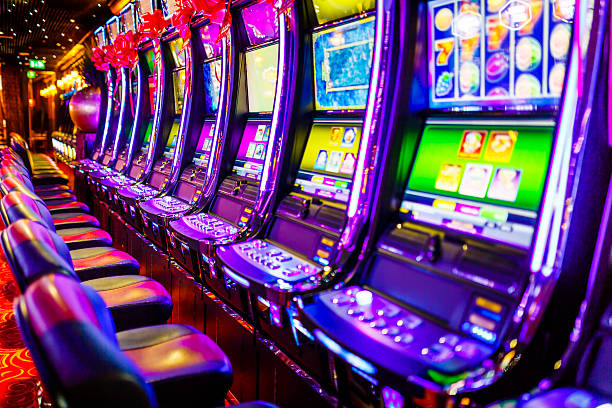
Online slot games are often recognised by their colourful reels, distinctive symbols, and animated backgrounds. Yet the artistic work behind these games involves much more than selecting attractive illustrations. Developers must consider how colours, shapes, movement, sound, and interface elements work together to communicate a consistent visual identity.
Many of the most important decisions involve small details that users may not consciously notice. Symbol outlines, animation timing, background contrast, and menu placement can all influence how clearly a game presents its mechanics. Examining these details reveals the relationship between artistic creativity and practical design.
Every Slot Begins With a Visual Concept
The artistic development of a slot game usually begins with a central theme.
This theme influences the symbols, backgrounds, colour palette, and presentation of special features.
A game inspired by a tropical setting might use bright natural colours, illustrated plants, and coastal scenery.
A futuristic title could feature mechanical patterns, illuminated surfaces, and electronic imagery.
Establishing a consistent concept helps different artistic elements feel connected.
Without this consistency, a game may appear visually disorganised.
Symbol Design Requires Careful Planning
Symbols need to communicate information quickly.
Although detailed illustrations may look attractive, excessive complexity can make them difficult to distinguish when displayed on small reels.
Artists therefore consider shape, colour contrast, and recognisable outlines.
Special symbols often require additional visual distinctions because they may activate features or contribute to winning combinations differently.
A wild symbol should be identifiable without requiring players to inspect every decorative detail.
These considerations become particularly important on mobile screens.
Background Artwork Establishes Atmosphere
Backgrounds provide context for the game’s theme.
Developers may use illustrated landscapes, architectural environments, or abstract graphical patterns.
Some backgrounds include subtle movement, such as changing light or animated objects.
These details can make the environment appear more developed.
However, the background should not compete with the reel symbols for attention.
Designers often use contrast and visual hierarchy to keep the main gameplay area readable.
Colour Selection Influences Readability
Colour is an important tool for organising visual information.
Bright symbols may stand out against darker backgrounds, while consistent colours can connect related features.
Developers also use colour to distinguish ordinary symbols from special ones.
Nevertheless, colour alone should not communicate essential information.
Different users may perceive colour combinations differently, making additional visual distinctions useful.
Clear outlines, labels, and consistent icon shapes can improve accessibility.
Animation Gives Static Artwork Movement
Animation allows developers to communicate events through motion.
Symbols may become highlighted after eligible combinations appear. During cascading features, symbols can disappear and replacements can enter the grid.
Bonus features may introduce additional visual transitions.
The timing of these animations affects how easily events can be followed.
Movements that are too fast may be confusing, while unnecessarily lengthy sequences can interrupt the interface.
Effective animation supports understanding rather than simply adding decoration.
Sound Design Complements the Artwork
Audio contributes to a game’s artistic identity.
Background music can establish atmosphere, while shorter effects communicate specific actions.
A fantasy-themed game might use orchestral sounds, while a technological setting could incorporate electronic tones.
Developers often coordinate audio with visual events.
This consistency helps distinguish ordinary reel movements from special feature sequences.
However, adjustable sound controls remain important because users have different preferences.
Artistic Presentation and Mathematical Rules
The artwork of a slot game should not be confused with its mathematical characteristics.
Conventional online slots use random number generators to determine outcomes according to predefined rules.
Return to player percentages and volatility describe aspects of the mathematical model rather than the visual design.
Terms such as bandot888 may appear in online gaming contexts, but they do not provide enough information to establish the characteristics of a particular game.
A visually elaborate title does not necessarily have different payout probabilities from a simpler-looking game.
Understanding these distinctions requires examining the paytable and technical information.
Mobile Design Introduces New Artistic Challenges
Mobile devices require artwork to remain readable on smaller screens.
Detailed backgrounds may need adjustments, while important symbols require sufficient size and contrast.
Touchscreen controls also influence the available space.
Developers may reorganise menus and information panels according to screen orientation.
Responsive design helps preserve the game’s artistic identity while maintaining practical usability.
The Importance of Consistent Icons
Icons should communicate the same functions throughout the interface.
A settings symbol should remain recognisable wherever it appears.
Similarly, controls for sound, information, and gameplay should follow consistent visual conventions.
This reduces unnecessary confusion and supports more efficient navigation.
Why Small Details Make a Difference
A slot game combines many individual design elements.
Each symbol, animation, sound effect, and interface component contributes to the finished presentation.
When these elements are coordinated, the game communicates its identity and rules more clearly.
When they conflict, even detailed artwork can become difficult to interpret.
The quality of the design therefore depends on organisation as much as creativity.
Conclusion
The art behind online slot games involves careful attention to symbols, backgrounds, colour, animation, sound, and interface organisation. These details help establish distinctive identities while communicating important gameplay information. Effective artistic design balances visual creativity with readability, ensuring that decorative elements support rather than interfere with the game’s underlying mechanics.
